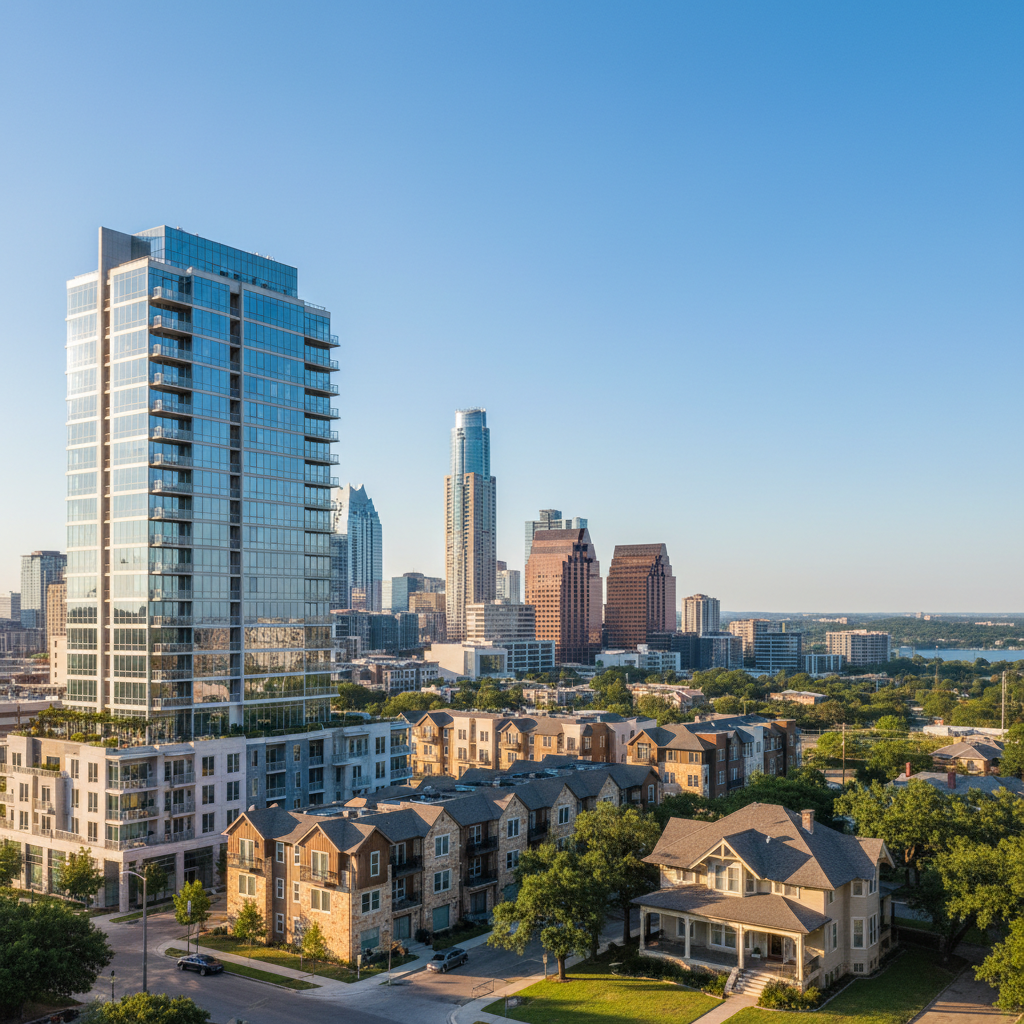
Austin is a premier global destination for real estate investment, consistently ranking as a top market for long-term appreciation and rental demand. Lisa Copeland Real Estate provides the hyper-local data and off-market access investors need to scale portfolios in Central Texas.
Investment properties near UT Austin (specifically in 78705) are real estate assets purchased with the primary goal of generating income through student rentals and capital appreciation due to sustained demand from the University of Texas population.
Serving the entire Central Texas corridor including Travis, Williamson, and Hays counties, with specific expertise in the Austin-Bergstrom International Airport expansion zone and the Domain second-downtown district.
Why Austin Remains a Top-Tier Investment Market
The Austin-Round Rock-Georgetown MSA continues to outperform national averages due to the 'Silicon Hills' tech migration and a robust job market anchored by Tesla, Apple, and Dell. With zero state income tax and a high influx of high-earning residents, the demand for quality housing remains inelastic, ensuring consistent cash flow and equity growth for strategic property owners.
Our Local Investment Property Specializations
We focus on three primary asset classes in the Greater Austin area: high-yield single-family residences in emerging suburbs like Manor and Kyle, luxury short-term rentals in waterfront districts, and multi-family value-add opportunities in established neighborhoods like North Loop and Cherrywood.
Data-Driven Acquisition and Market Analysis
Investment success in Austin requires more than just a search on the MLS. We provide deep-dive analytics on school district ratings, transit-oriented development (TOD) zones, and municipal zoning changes. This data-backed approach allows our clients to identify undervalued assets before they hit the general market.
The Lisa Copeland Advantage for Investors
With decades of experience in the Austin metroplex, Lisa Copeland provides a specialized network of property managers, vetted contractors, and specialized lenders. We don't just find properties; we help you build a scalable investment infrastructure to ensure your portfolio is managed for maximum profitability.
Our Streamlined Investment Property Acquisition Process
Navigating Austin's competitive investment landscape requires a clear, efficient process. We begin with a comprehensive investor consultation, defining your financial goals, risk tolerance, and preferred asset classes (e.g., student housing near UT Austin, suburban rentals in Leander, or urban multi-family in East Austin). Next, leveraging proprietary algorithms and off-market intelligence, we identify properties matching your criteria, often before they hit the public MLS. We then conduct rigorous due diligence, including rental income projections based on current market rates (e.g., average 1-bedroom rent in Zilker is $1,800), property condition assessments, and a pro forma analysis demonstrating potential ROI. Finally, we assist with offer negotiation, contract closing, and, if desired, connect you with our network of local property management services, ensuring a smooth transition from acquisition to cash flow generation.
Understanding Investment Property Costs and Value Drivers in Austin
The total cost of an investment property in Austin extends beyond the purchase price. Key drivers include property taxes, which average around 1.8% of assessed value in Travis County, and insurance, which can vary widely. Acquisition costs typically encompass appraisal fees ($500-$800), title insurance (0.5% of sale price), and lender fees (0.5%-1% of loan amount). Renovation costs, especially for value-add opportunities, are significant; for example, a kitchen remodel in Central Austin can range from $25,000 to $60,000. We provide detailed cost analyses, factoring in potential HOA fees (common in condos near Rainey Street or townhomes in Mueller) and ongoing maintenance, to ensure a transparent understanding of your overall investment and projected net operating income.
Common Pitfalls for Austin Real Estate Investors and How to Avoid Them
Many investors fall into common traps in the Austin market. A primary mistake is underestimating property tax increases, which can significantly impact cash flow – regular reassessments are common, particularly in rapidly appreciating areas like South Congress. Another pitfall is neglecting due diligence on short-term rental (STR) regulations; Austin has strict rules, especially for Type 2 STRs, impacting profitability. Investors also often overlook the impact of specific zoning overlays, like the East Austin Overlay, on potential development or renovations. We help you avoid these errors by providing upfront analysis of regulatory risks, accurate tax projections, and detailed property condition reports, protecting your investment from unforeseen liabilities and ensuring compliance with local ordinances.
Measuring Success: Quantifiable Outcomes for Your Austin Investment
For us, success is measured by concrete, financial outcomes for our investors. We target achieving average cash-on-cash returns of 8-12% for stabilized single-family rentals in growth corridors like Hutto or Buda, and often higher for value-add multi-family acquisitions. Our strategies aim for significant equity appreciation, with properties in the Austin MSA historically appreciating by an average of 7-10% annually over the last decade. We provide detailed quarterly performance reports, tracking key metrics such as occupancy rates (often 95%+ for our recommended properties), gross rental yield, and net operating income. Our goal is to not just find you a property, but to build a robust, high-performing asset that contributes significantly to your long-term wealth portfolio, with clear, measurable financial gains.
Choosing the Right Investment Real Estate Partner in Austin
Selecting the right real estate partner in Austin is crucial for investor success. Look for a firm with deep local market penetration and a verifiable track record, not just in sales volume, but specifically in successful investment transactions across diverse asset types. Your partner should offer robust analytical capabilities, providing data-driven insights into cap rates, rental comps, and future development plans (e.g., Project Connect's impact on property values). Transparency in fee structures and a strong network of vetted professionals – from lenders specializing in investment loans to reliable contractors for renovations – are non-negotiable. Lisa Copeland Real Estate embodies these qualities, offering a comprehensive, results-oriented approach tailored to serious investors seeking consistent returns in the Austin market.
How it works
1Initial Investment Consultation: Discuss your goals, budget, and risk tolerance for UT area properties.
2Targeted Property Search: Identify prime 78705 opportunities matching your criteria, focusing on student housing trends.
3Offer & Negotiation Strategy: Craft competitive offers and negotiate favorable terms, considering specific condo market dynamics.
4Closing & Post-Purchase Support: Navigate inspections, financing, and connect you with trusted property management resources.
Why choose us
Expertise in 78705 condo market and rental regulations.
Proven track record assisting investors with high-ROI properties.
In-depth knowledge of Austin's evolving educational and rental landscape.
Frequently asked questions
What is the average cap rate for investment properties in Austin?
Currently, cap rates in the Austin market typically range from 4% to 6%, depending on the specific neighborhood and asset class. While lower than some tertiary markets, the long-term appreciation potential in Central Texas significantly boosts the total return on investment.
Which Austin neighborhoods offer the best rental yields?
High-growth areas such as Pflugerville, Buda, and East Austin currently offer some of the strongest rental yields due to lower entry prices and high demand from the local tech workforce.
Are short-term rentals (STRs) legal in Austin, Texas?
Austin has specific zoning regulations for STRs, divided into Type 1, 2, and 3 licenses. It is critical to verify the property's zoning and current city ordinances before purchasing a property intended for platforms like Airbnb.
What are the property tax implications for Texas investors?
Texas has no state income tax, but property taxes are higher than the national average, typically ranging from 1.8% to 3.0% of assessed value. Our team helps you calculate precise pro-forma statements that account for these specific carrying costs.
How does the 'Tesla Effect' impact Austin real estate?
The Giga Texas factory has created a massive surge in demand for housing in Southeast Austin and Del Valle. Investors are seeing rapid appreciation in these corridors as supporting industries and employees relocate to the area.
How do recent zoning changes affect investment opportunities in Austin?
Recent zoning changes like the VMU (Vertical Mixed Use) overlays and proposed HOME initiatives are increasing density potential along major corridors. This can create new opportunities for multi-family development or redeveloping single-family lots into duplexes or triplexes, especially near central Austin and transit lines, potentially boosting land value and rental income per square foot.
What is the typical timeframe from offer to closing for an investment property in Austin?
The typical timeframe from offer acceptance to closing for an investment property in Austin is usually 21 to 30 days. This period allows for lender financing, title searches, appraisals, and property inspections. Cash offers can often expedite this to as little as 7-14 days, offering a competitive edge in a hot market.
Are there specific Austin neighborhoods experiencing significant revitalization for investors?
Yes, neighborhoods like St. John's, Colony Park, and portions of East Austin (e.g., Springdale Road corridor) are undergoing significant revitalization driven by new development and infrastructure projects. These areas often offer higher potential for appreciation and rental yield growth compared to already saturated, high-priced markets, appealing to value-add investors.
What kind of financing options are available for investment properties in Austin?
Investors in Austin have several financing options, including conventional mortgages (typically requiring 20-25% down for investment properties), hard money loans for short-term rehab projects, and commercial loans for multi-family or mixed-use properties. We connect investors with local lenders specializing in investment real estate to find the best terms for their specific strategy.
How does population growth impact rental demand in Austin?
Austin's continuous population growth, averaging over 2% annually, directly fuels high rental demand. This sustained influx of new residents, particularly young professionals, consistently keeps occupancy rates high and puts upward pressure on rental prices across all property types, making it a favorable environment for rental property investors.