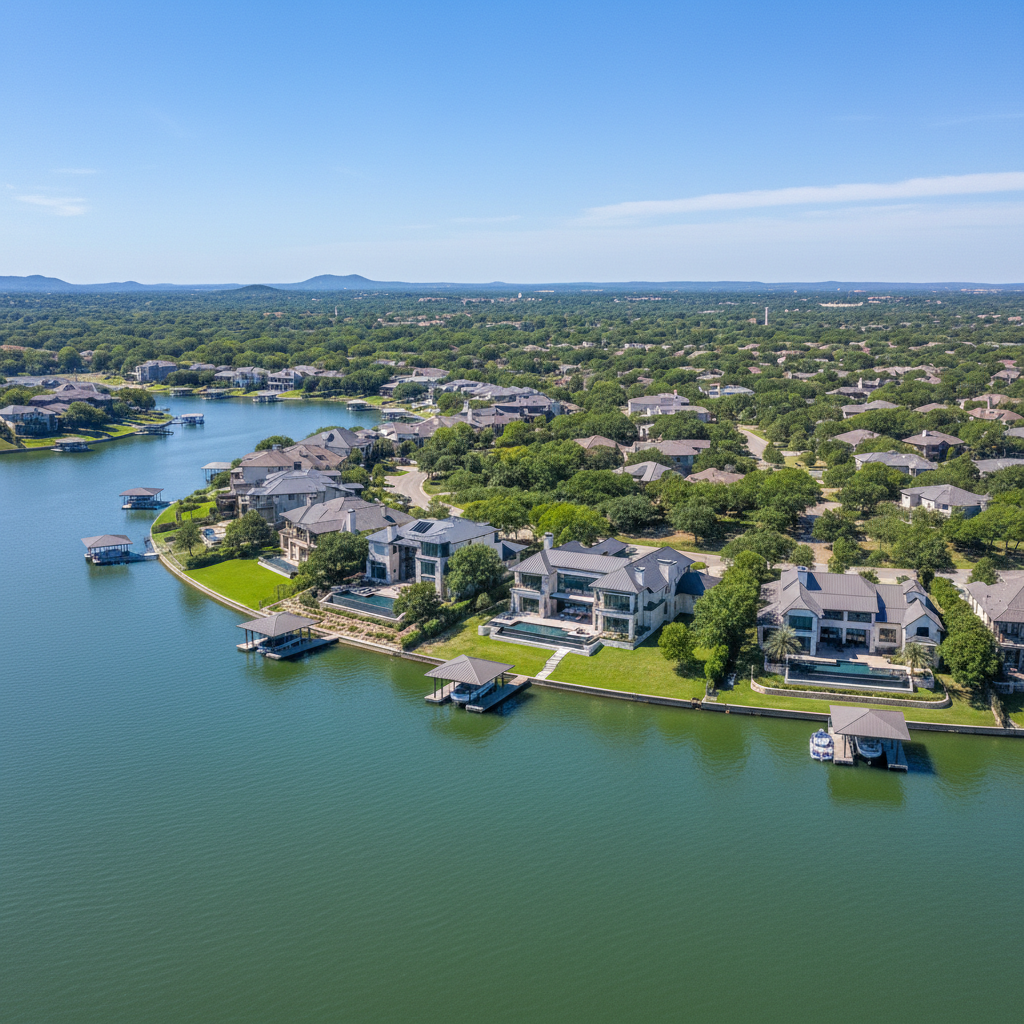
Experience the pinnacle of Texas living with unmatched views and private water access across the most sought-after zip codes. Lisa Copeland Real Estate specializes in connecting discerning buyers with luxury waterfront estates that offer a permanent vacation lifestyle.
Serving the entire Central Texas corridor including Travis and Williamson Counties, focusing on the unique riparian rights and shoreline management policies of the Highland Lakes chain.
The Allure of Lake Austin and Lake Travis Living
Living on the water in Austin is about more than just a view; it is a lifestyle defined by boating, sunset vistas, and tranquil mornings. From high-end contemporary estates on Lake Austin to cliffside retreats overlooking Lake Travis, the local market offers diverse architectural styles and deep-water docks for the ultimate aquatic experience.
Round Rock’s Hidden Waterfront Gems
While known for its tech hubs and family-friendly atmosphere, Round Rock boasts beautiful properties tucked along Brushy Creek and private lakeside enclaves. These homes offer a peaceful escape from the suburban bustle while remaining minutes away from the Dell Diamond and the Kalahari Resorts.
Cedar Park Lakeside Luxury
Cedar Park provides a unique gateway to the Texas Hill Country, featuring homes near the northern shores of Lake Travis and smaller community lakes. Potential buyers choose this area for its excellent schools, vibrant shopping at 1890 Ranch, and the ability to find secluded waterfront acreage that remains close to Austin's urban core.
Expert Guidance in the Waterfront Market
Navigating the complexities of waterfront real estate—from bulkhead inspections and dock permits to flood zone elevation certificates—requires a specialized touch. Lisa Copeland brings years of local expertise to ensure your investment is protected and your transition to the water is seamless.
Understanding Waterfront Property Valuations in Austin
The valuation of waterfront properties in Austin, especially along Lake Austin and Lake Travis, is significantly influenced by factors beyond typical real estate metrics. Direct water frontage, particularly deep water access suitable for larger boats, commands a premium, often adding 20-30% to a home's value compared to similar non-waterfront properties. Proximity to amenities like the University of Texas Golf Club on Lake Austin or marinas such as Hurst Creek Marina on Lake Travis also impacts pricing. Restrictions on future dock expansion, regulated by the Lower Colorado River Authority (LCRA), and flood plain designations (like those in AE zones) are critical considerations. Our process involves detailed comparative market analyses, factoring in permits, water depth, and environmental regulations to provide accurate pricing guidance for both buyers and sellers.
Navigating Regulations for Waterfront Development in Round Rock
Developing or modifying waterfront properties in Round Rock, particularly along Brushy Creek or within specific master-planned communities like Forest Creek, involves a distinct set of regulatory hurdles. The City of Round Rock's Watershed Protection Ordinance dictates setbacks and impervious cover limits, often requiring more extensive permitting for any construction within 100 feet of a perennial stream. For properties bordering Brushy Creek, additional oversight from the Williamson County Conservation Foundation might apply, especially concerning riparian buffer zones. We provide a comprehensive checklist and facilitate pre-application meetings with city planners to streamline the approval process, helping clients avoid common delays that can add 3-6 months to project timelines and increase costs by 10-15%.
Choosing the Right Waterfront Real Estate Professional
Selecting a real estate agent for waterfront properties requires specialized expertise beyond a standard license. Look for agents with proven experience in dealing with LCRA permits, understanding fluctuating lake levels, and negotiating complex title issues unique to riparian rights. Ask for references specifically related to waterfront transactions and inquire about their network of marine surveyors, environmental consultants, and bulkhead contractors. A truly specialized agent, like Lisa Copeland, will demonstrate a deep understanding of specific coves on Lake Austin (e.g., Cat Mountain Cove vs. Bee Creek) and the nuances of HOA regulations in communities such as The Hollows on Lake Travis, directly impacting property use and long-term value. This specialized knowledge can result in savings of 5-10% on your purchase or a quicker sale.
Common Pitfalls When Buying Waterfront in Central Texas
Buyers often overlook several critical aspects when purchasing waterfront homes. A major mistake is neglecting a thorough inspection of bulkheads, docks, and retaining walls, which can incur tens of thousands in repair costs. Many also underestimate the impact of fluctuating lake levels; Lake Travis, for example, can see variations of over 30 feet, affecting usability. Overlooking necessary permits for existing structures or future modifications, especially from the LCRA, can lead to significant fines and mandated removal. Additionally, not understanding flood insurance requirements for properties within designated flood zones can result in unexpectedly high annual premiums. Our team proactively addresses these issues by recommending specialized inspections and guiding clients through all regulatory clearances.
Maximizing Your Waterfront Investment: Measured Outcomes
A successful waterfront real estate investment involves more than just the purchase price; it's about achieving measurable long-term value and satisfaction. For sellers, our targeted marketing strategies, including aerial drone photography showcasing water frontage and direct lake access, typically reduce time on market by 15-20% compared to non-specialized listings. Buyers benefit from our negotiation expertise, often securing properties with premium features like boat lifts or covered slips at competitive prices, representing an average 3-5% saving. Post-purchase, clients frequently report a 90% satisfaction rate with their new lifestyle, citing enhanced family recreation, increased property appreciation (historically 7-10% annually for prime waterfront in Austin), and peace of mind from a meticulously managed transaction. We track these outcomes to continually refine our specialized approach.
Frequently asked questions
What should I check before buying a waterfront home in Austin?
It is crucial to verify LCRA (Lower Colorado River Authority) regulations regarding boat docks, check for existing retaining wall integrity, and understand the water level fluctuations of the specific lake.
Are there waterfront properties available in Round Rock?
Yes, while rarer than Austin, Round Rock features beautiful homes along Brushy Creek and within exclusive private pond communities like Forest Ridge.
How does waterfront property affect my insurance rates?
Properties near water may require additional flood insurance through the NFIP or private insurers, depending on the FEMA flood map designation for the specific lot.
Can I build my own dock on Lake Travis?
Building a dock requires a permit from the LCRA and must adhere to strict safety and environmental guidelines. Lisa Copeland can help you navigate this permitting process during your due diligence.
Is the Cedar Park area good for lake access?
Absolutely. Cedar Park offers excellent proximity to Lake Travis via various public parks and private marinas, making it a top choice for boat owners.
What's the average depth of Lake Travis in Austin?
Lake Travis's average depth varies significantly. At full capacity, it's about 62 feet deep, but its maximum depth near the Mansfield Dam can exceed 200 feet. Fluctuations due to rainfall and water release are common, so always check current lake levels through the LCRA website before planning water activities.
Are there specific zoning laws for waterfront properties in Cedar Park?
Yes, Cedar Park generally follows Williamson County regulations, but properties directly bordering tributaries to Lake Travis or community lakes often have specific overlay districts or environmental protection zones. These can dictate setbacks for construction, impervious cover limits, and landscape requirements to protect water quality. Reviewing the city's zoning map and ordinances is crucial.
How do short-term rental regulations impact waterfront homes?
Short-term rental (STR) regulations vary by city and HOA. Austin has strict rules, especially for non-owner-occupied STRs, requiring licenses and limiting density. Round Rock and Cedar Park may have different ordinances. Many waterfront HOAs also have their own covenants prohibiting or severely restricting STRs, which can greatly affect potential rental income and property value. Always investigate these before purchasing.
What additional costs should I budget for with a waterfront home in Austin?
Beyond the purchase price, budget for potential flood insurance (if in a flood zone), higher property taxes due to premium valuations, and significant maintenance for docks, bulkheads, and retaining walls. Boat lift repairs, periodic dredging expenses, and potentially higher utility costs for irrigation or pool maintenance are also common additional expenditures to factor in.
Can I use well water for my waterfront property?
While some rural waterfront properties might utilize well water, most developed areas in Austin, Round Rock, and Cedar Park connect to municipal water and sewer services. Drilling a new well requires permits from the local groundwater conservation district (e.g., Barton Springs Edwards Aquifer Conservation District or Post Oak Savannah GCD) and compliance with strict environmental regulations. It's less common for established waterfront communities.