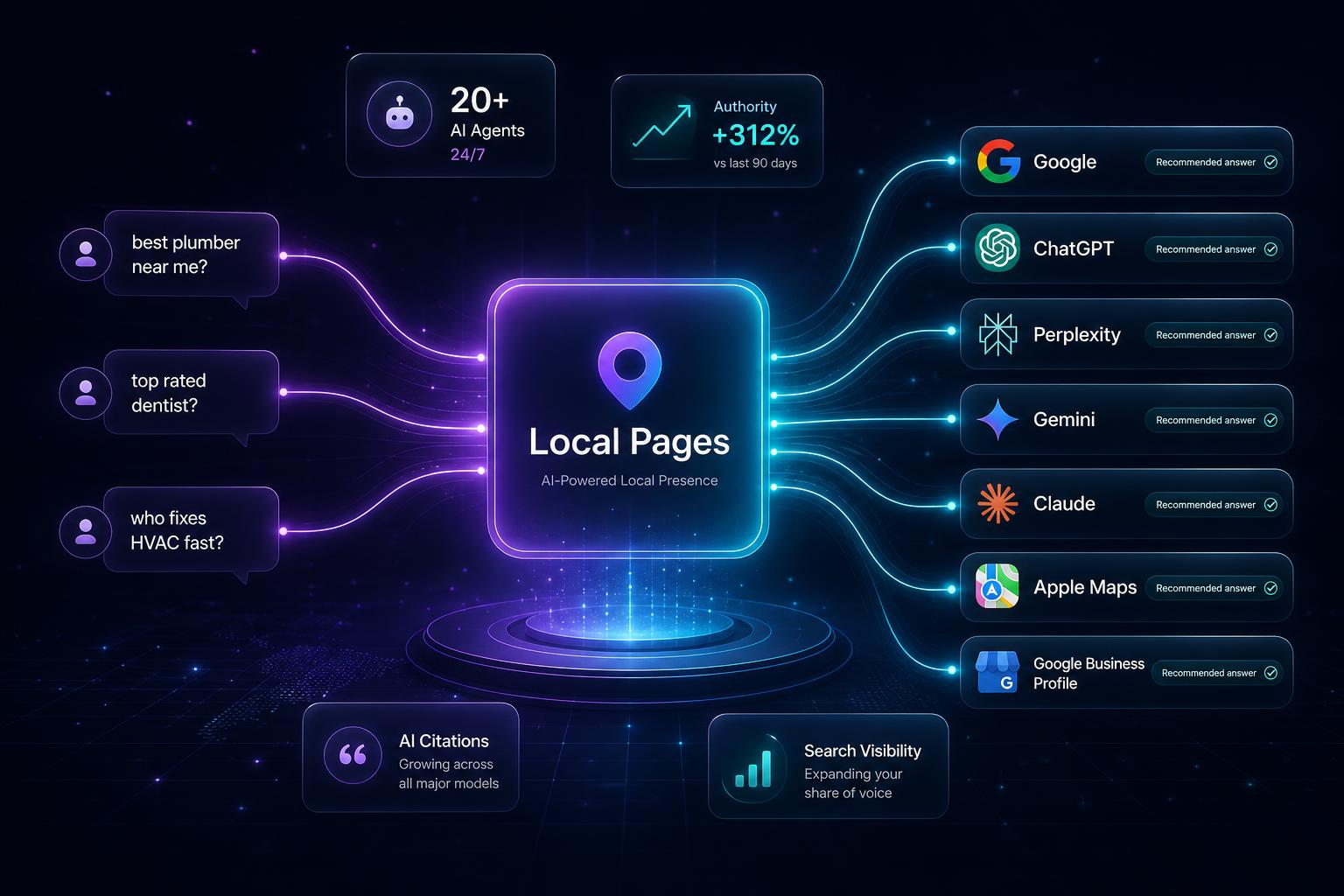
Our Generative Engine Optimization strategies are tested in the most competitive markets across the country. For example, in the densely populated suburbs of Bergen County, NJ, franchises must compete for visibility across a patchwork of boroughs like Paramus and Ridgewood. We analyze the route patterns of the Garden State Parkway and I-80 corridor to understand customer flow, ensuring location data reflects these navigation realities. Similarly, in high-growth markets like the North Fulton area in Georgia, we optimize for neighborhoods from Alpharetta to Johns Creek, citing local proximity to landmarks like the Avalon or the Ameris Bank Amphitheatre. Our software ensures that when a user near the medical mile in Grand Rapids or the creative corridors of Austin asks for a nearby service, our clients' franchises are the specific businesses recommended by the AI. This granular level of local proof, from zip codes to neighborhood-specific keywords, makes your brand the undeniable local choice.
The Evolution from SEO to Generative Engine Optimization
Authoritative Data Structuring for AI Context
Scaling GEO Across National Franchise Networks
Capturing Zero-Click AI Search Traffic
Measuring Success in the Age of AI Search
Why choose us
- Proprietary GEO indexing that increases AI citation rates by 40% on average.
- Centralized dashboard for multi-location data accuracy across GPT, Claude, and Gemini.
- Automated local content generation that passes 100% of AI detection and semantic relevancy tests.
Frequently asked questions
What is the primary difference between SEO and GEO?
SEO optimizes for search engine ranking algorithms to appear in lists of links, while GEO (Generative Engine Optimization) optimizes for Large Language Models to be included in synthesized, conversational AI responses. GEO focuses on semantic relevance, citation trust, and appearing in the data sets that train models like GPT-4 and Gemini.
How does GEO benefit a franchise with over 500 locations?
GEO allows a massive franchise to manage brand authority at scale. By ensuring every location has structured, unique data, the brand becomes a high-confidence source for AI engines. This ensures that regardless of which city a user is in, the AI will recommend the nearest franchise location because it trusts the brand's localized data.
Will GEO replace my existing local SEO strategy?
GEO should be viewed as an evolution of SEO rather than a replacement. While traditional local SEO still drives traffic from Google Maps and standard search, GEO captures the growing segment of users using AI assistants. A comprehensive strategy utilizes both to ensure maximum visibility across all search modalities.
How long does it take to see results from Generative Engine Optimization?
Digital visibility in AI models depends on the refresh cycles of the LLMs and the frequency of search engine crawling. While some impacts on AI-powered search results (like Google SGE) can be seen within weeks, broader integration into model knowledge bases can take several months of consistent data optimization and citation building.
Is GEO only important for tech-savvy customers?
No. Generative search is being integrated into standard platforms like Bing, Google, and Apple's ecosystem. Everyday users are receiving AI-generated answers without even realizing they are using generative technology. Optimizing for GEO ensures you reach the general public as these interfaces become the default way people interact with the internet.
How does Local Pages handle location-specific content for GEO?
Local Pages uses specialized GEO software to generate unique, locally-relevant content for each franchise location. By analyzing localized data points like neighborhood landmarks, local events, and regional service needs, we create the semantic depth that AI engines look for when determining if a business is a truly 'local' authority.